Glenview Epoxy Flooring installs metallic epoxy floor systems in Glenview, IL, serving surrounding cities including Winnetka, Prospect Heights, Deerfield, Lincolnwood and Norridge. Metallic epoxy is the most decorative floor we pour, and our 20+ years on concrete matter most here, because it shows every flaw in the slab and every misstep in the application.
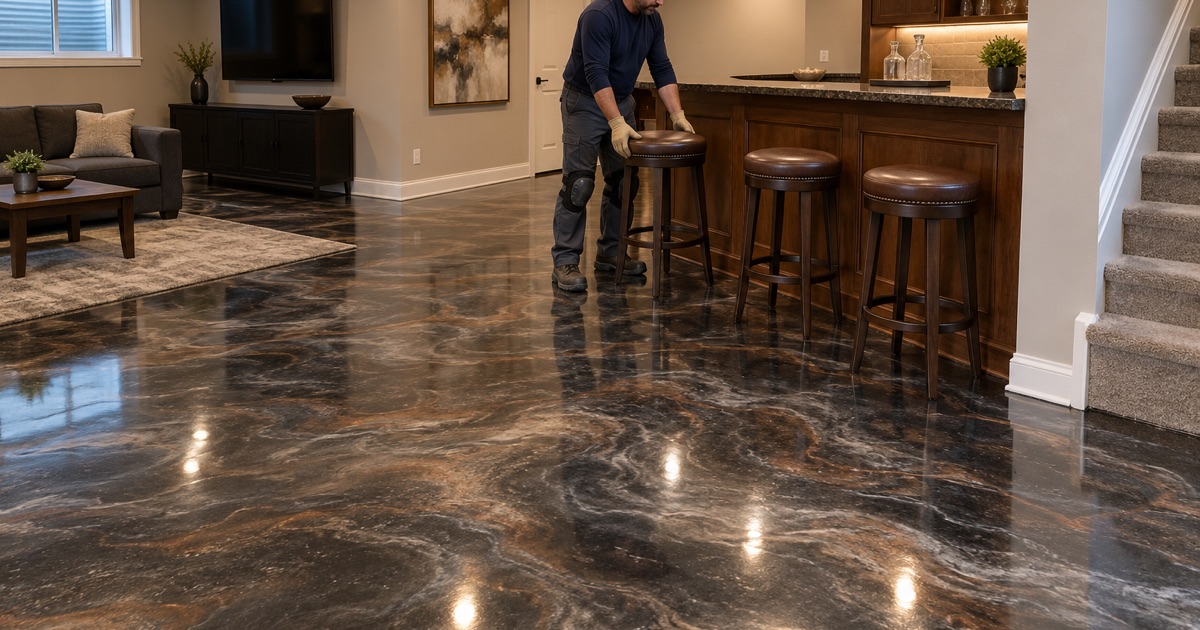
A metallic floor uses pigments suspended in clear or tinted epoxy that move as the coat levels, creating a marbled, three-dimensional surface that can resemble polished stone, moving water or brushed metal. It suits finished basements, showrooms, offices, salons and garages where the floor is meant to be noticed.
Because the look depends on technique as much as material, our proposals name the product line, the number of coats, the finished thickness and the technique we will use. We also make a sample board in your colors before the job, so the finished floor matches what you agreed to.
Preparing a Slab for Metallic Epoxy
Grinding the Surface Flat and Open
A metallic coat is self-leveling and glossy, so it magnifies everything underneath it. High spots, old trowel marks and ridges from previous coatings all show through, and the pigments pool in low spots and thin out over high ones.
We grind the slab flat with a diamond grinder to an ICRI profile that suits the primer, then vacuum it clean. On older floors that means removing paint, sealer and adhesive down to sound concrete, because a metallic floor cannot hide a weak layer under it any more than a plain one can.
Repairing Cracks and Joints Before the Pour
Cracks, spalls and pitting are filled and ground flush before any primer goes down, and the repairs are skim-coated so they do not telegraph through the finished color. On a decorative floor, even a fine crack line can read through as a dark streak.
Where a slab has control joints, we decide with you whether to honor them as design lines, fill them flush or frame them with borders. A crack that is still moving will eventually show through any coating, so active cracks get a flexible repair and an honest conversation about how they will look.
Moisture Testing for a Decorative Floor
Moisture under a metallic floor causes the same blistering and peeling it causes under any coating, but on a decorative floor the damage is far more visible. We test with an ASTM D4263 plastic sheet test and, where needed, ASTM F1869 or ASTM F2170 testing before pricing the job.
Many Glenview basements sit on older slabs without a vapor retarder, so a metallic floor in a lower level often needs a moisture-mitigation primer first. That primer goes on before the base coat, and it is shown as its own line on the proposal.
How a Metallic Floor Is Poured
Primer and Base Coat
A primer seals the ground concrete and stops air from rising out of the slab, which would otherwise leave pinholes and bubbles in the metallic layer. Over the primer we lay a tinted base coat that sets the background color the metallic pigments will move across.
The base coat matters more than most owners expect. A dark base deepens the contrast and makes the swirls stand out, while a light base gives a softer, more even look, and we choose it with you as part of the sample board.
The Metallic Coat and Working Time
The metallic layer is mixed, poured and spread across the floor, then worked with rollers, trowels, brushes or solvent sprays depending on the look you want. The pigments keep moving as the epoxy levels, and that movement creates the pattern.
Metallic epoxy has a limited working time, and every move made in that window is permanent once the coat sets. That is why we plan the layout, the starting point and the crew positions before the first bucket is poured, rather than improvising on a floor that cannot be redone.
Topcoats for Protection and Sheen
Once the metallic coat has cured, we apply a clear topcoat to protect it from scratches, chemicals and sunlight. A polyaspartic or urethane topcoat resists ultraviolet ambering and wear far better than an epoxy alone, which keeps the color and depth from fading.
The topcoat also sets the final sheen and grip. A high gloss shows the metallic depth best, while a satin sheen hides scratches and dust more easily, and a fine aggregate can be added where the floor will get wet.
Choosing the Look
Colors and Effects
Metallic pigments come in a wide range of colors, from silver, pewter and charcoal to copper, bronze, blue and green. They can be used alone or blended, and the effect can lean toward marble, ocean water, lava or a brushed metal finish depending on the technique.
We help you choose colors that suit the room’s lighting, cabinetry and walls, and we make the sample board on a real substrate so you can see it in your own space before the floor is poured.
Movement, Veining and Consistency
Some owners want strong veining and dramatic movement, while others want a quieter, more even look. The amount of movement depends on the technique, the base coat and how the floor is worked, and we can steer it in either direction.
What we cannot do is make two metallic floors identical. Every floor forms its own pattern as it levels, and across a large area there will be variation. We set that expectation clearly at the sample stage so the finished floor is a pleasure rather than a surprise.
Borders, Saw Cuts and Logos
Saw-cut lines, contrasting borders and inlaid logos can frame a metallic floor or divide a large room into zones. In a showroom or salon, a logo set into the floor reinforces the brand, and in a basement a border can define a family room from a gym area.
We plan those features with the slab’s joints in mind, so cracks follow the design lines instead of running through a logo. Layout is drawn on the slab and agreed before any primer goes down.
Where Metallic Epoxy Works Best
Finished Basements and Living Spaces
Metallic floors are a popular choice for finished lower levels in Glenview, where most houses have a full or partial basement. They give a family room, home bar or media room a high-end look without the cost and moisture risk of wood or carpet on a below-grade slab.
We still read the basement for past water and test the slab before recommending a metallic floor, because a lower level that floods will damage any finish, decorative or not.
Showrooms, Salons and Offices
In commercial spaces, a metallic floor creates a distinctive look that customers remember. Showrooms, salons, restaurants and office lobbies use metallic epoxy to stand out, and the seamless surface is easy to keep clean.
We phase commercial metallic jobs around business hours and keep the space closed and dust-free during the pour, because a single footprint or airborne particle shows in a glossy decorative floor.
Garages With the Right Topcoat
A metallic garage floor is possible, but it needs a polyaspartic or urethane topcoat to stand up to winter salt, hot tires and sunlight. Without it, the metallic layer will amber near the door and scratch under the grit tracked in from the road.
We build the garage system on a properly ground slab with real thickness under the decorative layer, so the floor holds up to cars as well as it looks. A fine aggregate in the topcoat near the house door adds grip when snowmelt drips off the car.
- 20+ Years on Concrete
- Moisture Test in Every Scope
- Free Written Estimates