Epoxy Flooring in Glenview, IL

Garage, basement and commercial floors ground to a real profile and moisture-tested before a single coat goes down.

Glenview Epoxy Flooring has spent 20+ years grinding, repairing and coating concrete, and in Glenview, IL that work covers epoxy garage floors, basement floor epoxy, polished concrete, polyaspartic floor coating and commercial epoxy flooring. Every job starts with the slab itself: we test it for moisture, map its cracks and old coatings, and open the surface mechanically before anything is mixed.

That order matters because most failed floors were never really bonded. A coating rolled over an acid-etched or dusty slab looks finished on the first day and starts lifting at the first hot tire or the first damp spring, and no topcoat can fix a floor that was never prepared.

Our proposals name the product line, the coat count and the finished thickness, so you can hold the floor up against the quote once it is done. We also say plainly when a slab should be repaired or replaced before it is coated, even when that means a smaller job for us.

Get Your Free Quote

Fast response • No obligation

So we can reach you about your request.

So we can send you a confirmation after you submit this inquiry form.

  • 20+ Years on Concrete
  • Moisture Test in Every Scope
  • Free Written Estimates

What we do

Our Services

Ground, tested and coated epoxy floors for Glenview, IL

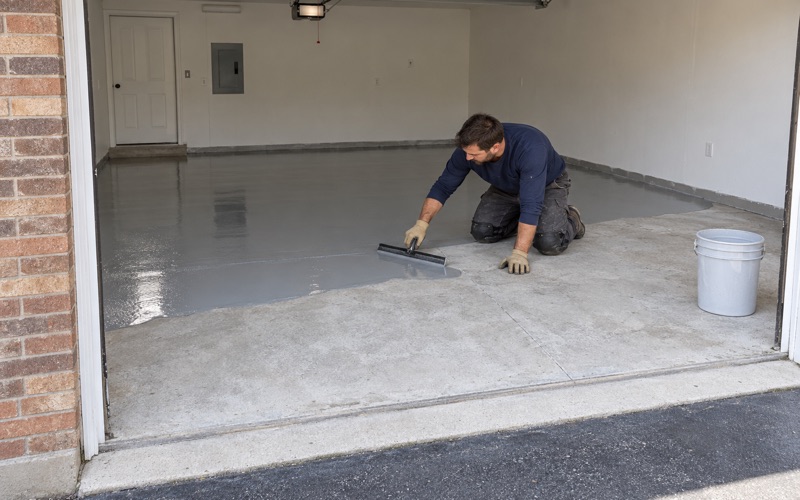
Gray epoxy base coat spread with a flat squeegee across the ground slab of an attached Glenview garage.

Epoxy Garage Floor

Ground, moisture-tested epoxy garage floors built to shrug off road salt, hot tires and Glenview winters.

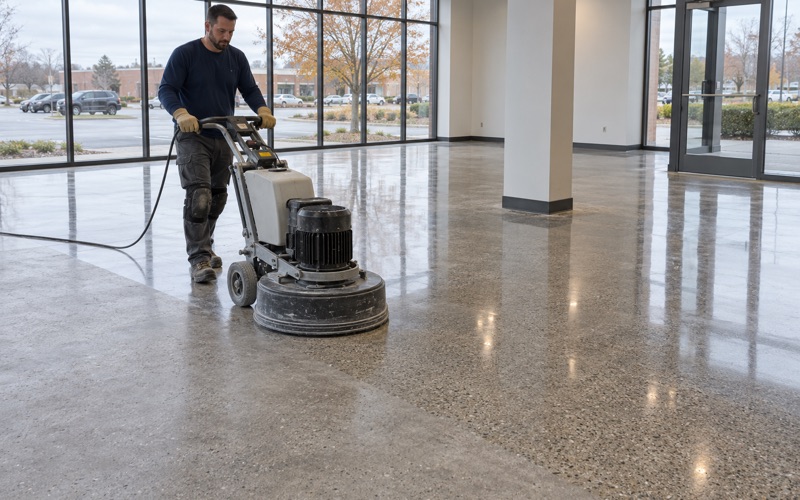
A walk-behind polisher bringing up a high gloss on a ground concrete showroom floor in Glenview.

Polished Concrete Floors

Ground, densified and polished concrete floors for Glenview homes and businesses, with the aggregate and sheen chosen up front.

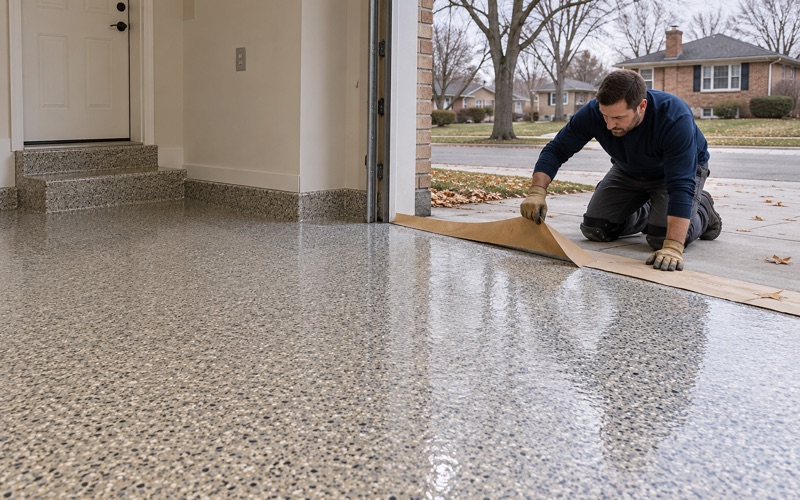
Masking paper pulled from the threshold of a same-day polyaspartic floor in a Glenview garage on a cold day.

Polyaspartic Floor Coating

Fast-curing, UV-stable polyaspartic floor coatings for Glenview garages and businesses, applied over properly ground concrete.

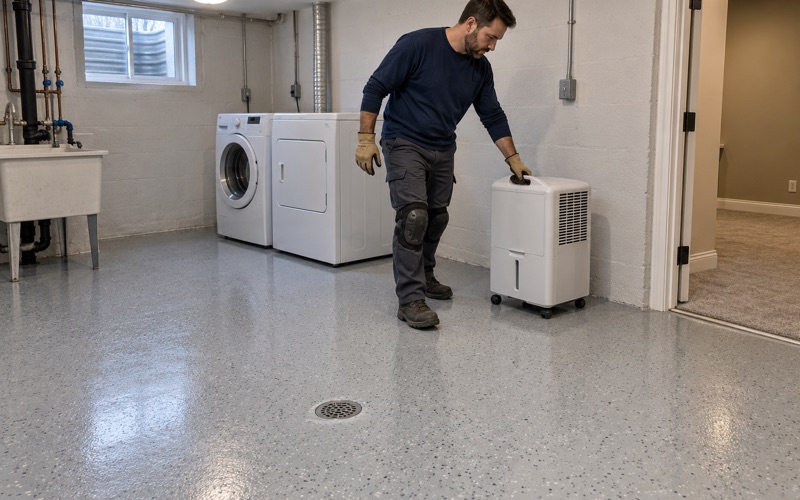
A dehumidifier wheeled into the laundry corner of a newly coated Glenview basement floor beside the floor drain.

Basement Floor Epoxy

Moisture-tested basement floor epoxy for Glenview homes, built for laundry rooms, gyms and finished lower levels.

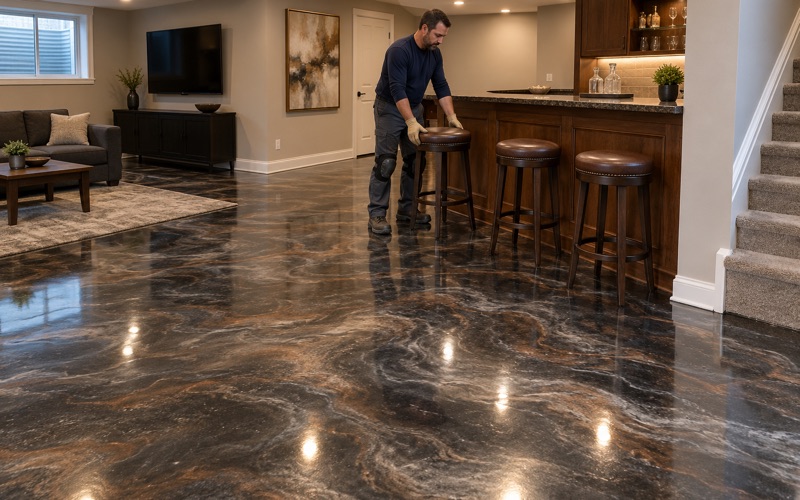
A bar stool set down on a swirled bronze and charcoal metallic epoxy floor in a Glenview basement rec room.

Metallic Epoxy Floor

Marbled metallic epoxy floors for Glenview basements, showrooms and garages, poured by a crew that knows how the material moves.

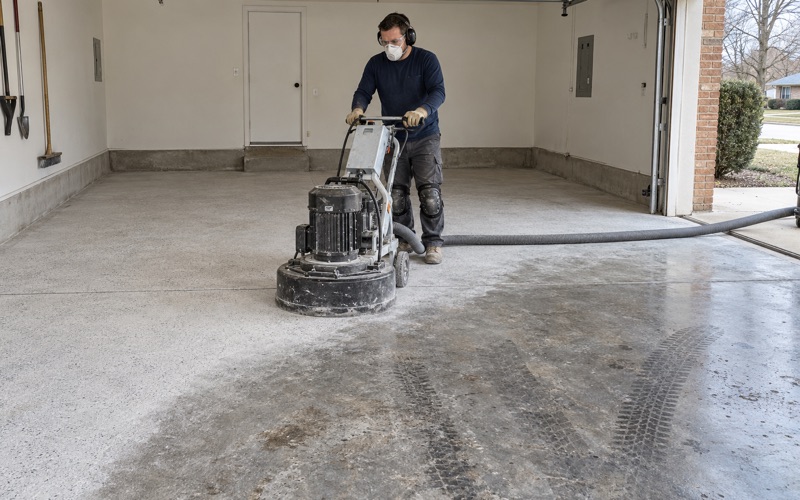
A walk-behind grinder with a dust shroud opening up the old slab of an attached Glenview garage.

Concrete Grinding

Diamond grinding and shot blasting for Glenview slabs, removing old coatings and preparing concrete for a lasting floor.

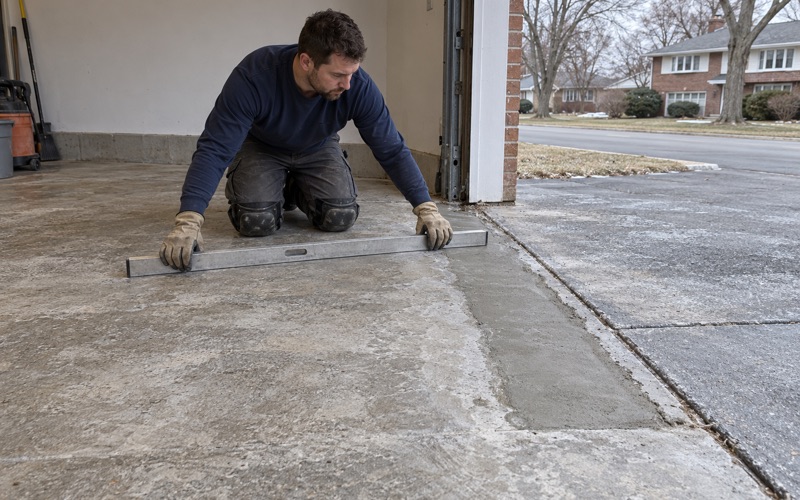
An aluminum straightedge laid across a fresh mortar patch at the salt-worn door edge of a Glenview garage slab.

Concrete Floor Repair

Crack, spall, joint and salt-damage repair for Glenview concrete floors, with honest advice when a slab should be replaced.

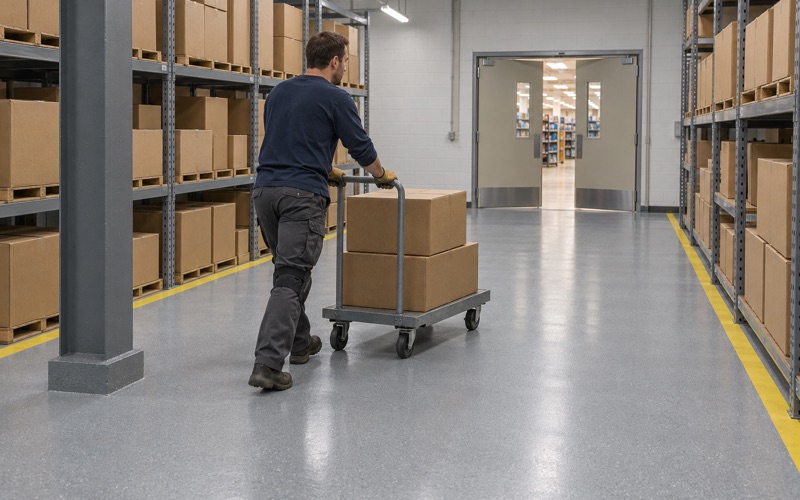
A platform cart rolled across a quartz-textured stockroom floor in a Glenview retail building.

Commercial Epoxy Flooring

Seamless commercial epoxy floors for Glenview clinics, offices, retail, gyms and service bays, installed around business hours.

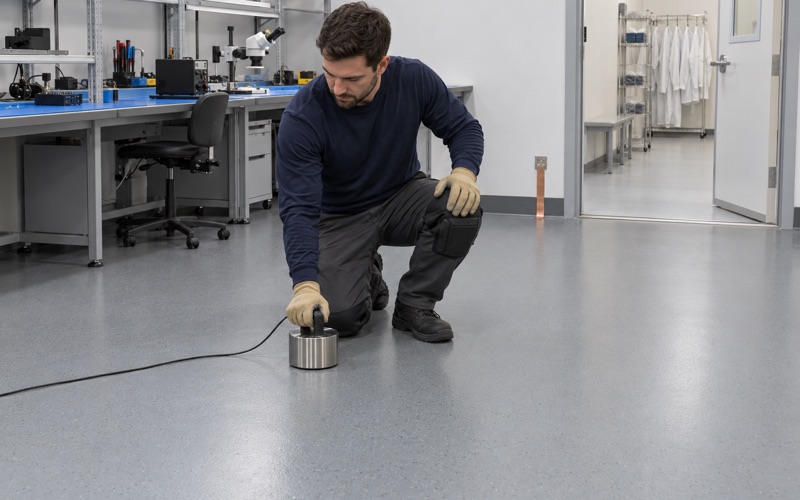
A heavy round test electrode set on a static-dissipative floor in a Glenview electronics room.

ESD Flooring

Static-dissipative and conductive epoxy floors for Glenview labs, electronics areas and server rooms, tested by resistance.

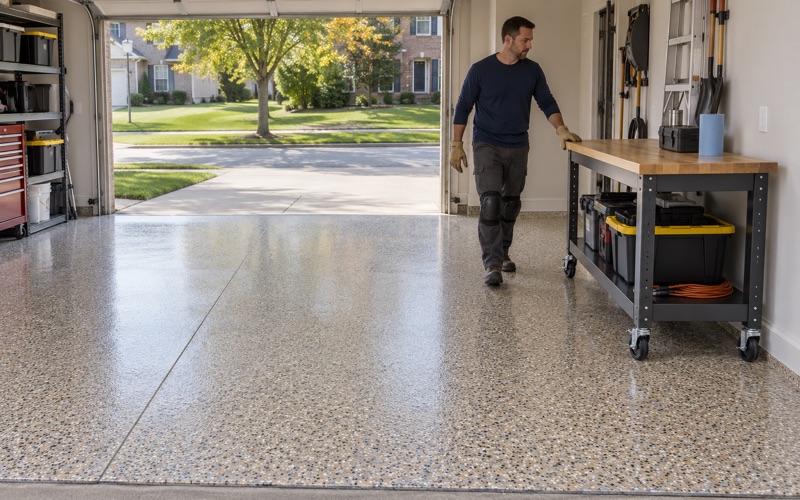
A rolling workbench guided onto a full-broadcast tan and black flake floor in a Glenview two-and-a-half-car garage.

Flake Epoxy Floor

Full-broadcast vinyl flake epoxy floors for Glenview garages, basements and shops, in the blend and chip size you choose.

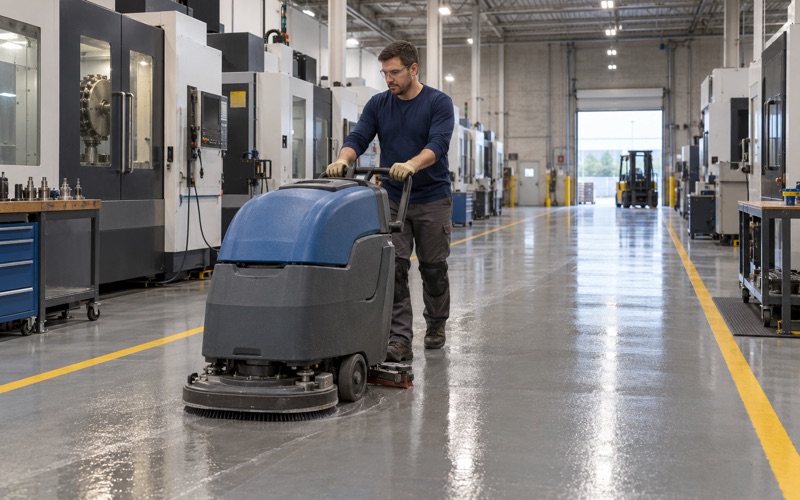
A walk-behind scrubber cleaning a coated aisle between machining centers in a Glenview manufacturing plant.

Industrial Epoxy Flooring

High-build industrial epoxy for Glenview warehouses, plants and loading docks, built for forklifts, chemicals and long shifts.

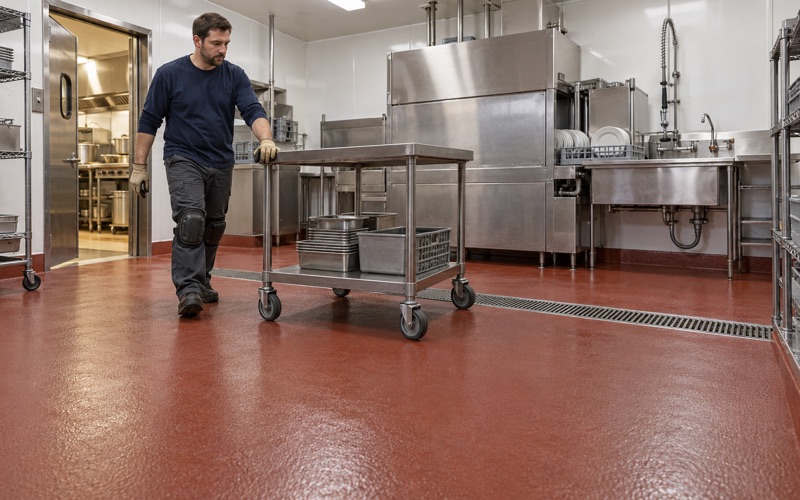
A stainless prep table rolled back over a coved urethane dish room floor with a trench drain in a Glenview restaurant.

Commercial Kitchen Flooring

Urethane cement and coved resin floors for Glenview restaurant, bakery and institutional kitchens, installed around service.

Experience on Glenview Concrete

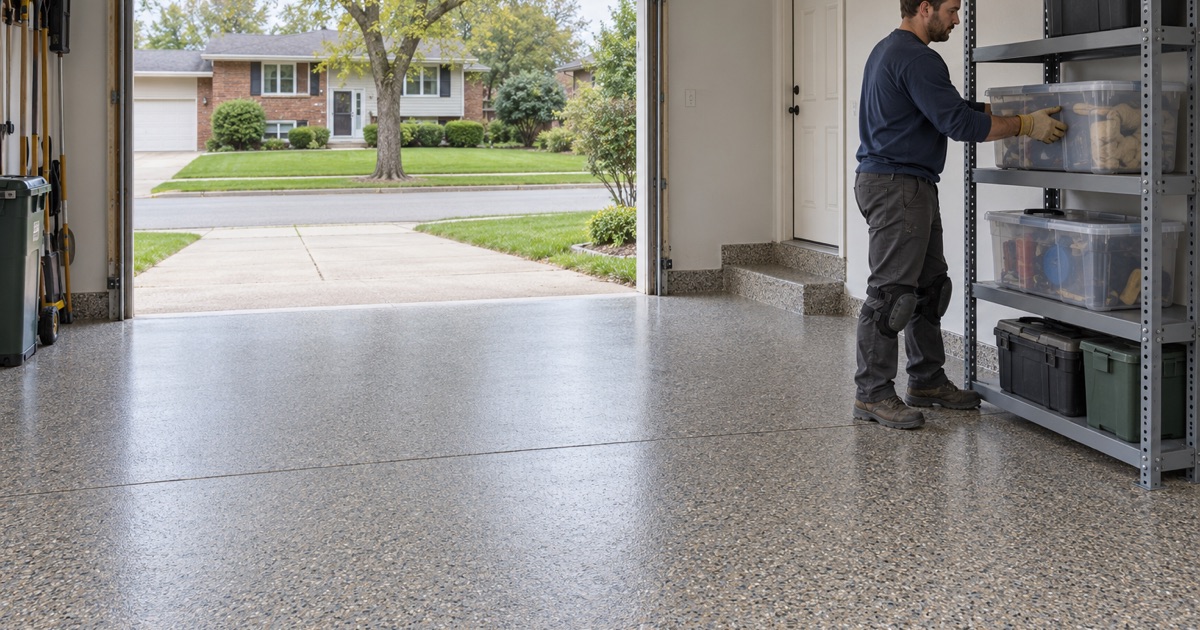
A storage tote set back on the shelving of an attached Glenview garage over its new charcoal and tan flake floor.

20+ Years of Epoxy Floor Work

We have been preparing and coating concrete floors for more than twenty years, across attached garages, damp basements, food service kitchens and working warehouses. That time on slabs is what lets us read a floor before we price it, from the white bloom of efflorescence to the soft, chalky surface that tells us a slab needs more grinding than usual.

Why Choose Glenview Epoxy Flooring

Ground, Never Etched

Every slab we coat is opened with a diamond grinder or a shot blaster to a measured ICRI concrete surface profile, so the epoxy has a real texture to lock into rather than the shallow, uneven bite an acid etch leaves behind on a hard-troweled garage floor.

Moisture Tested Before Pricing

No price is final until the slab has been tested for moisture, because Glenview sits on glacial till with seasonal water tables that can run close to the surface. A basement or garage that reads damp gets a mitigation primer or a different system, so the coating stays bonded rather than blistering in its first spring.

Code Checked for Your Garage

Glenview’s 2021 residential code limits the garage vapor retarder exception to detached garages, so an attached-garage slab poured under it needs a retarder while an older one may have none. We find out which slab you have before choosing the system, rather than discovering it when the floor starts to lift.

Built for Salt Season

Winter brine and rock salt ride in on every tire for months, so our garage systems are chosen for chemical resistance and sealed broadcast texture rather than a thin, glossy film that a single season of salt slush etches, dulls and lifts at the tire path.

Contracts Written the Illinois Way

Home jobs over $1,000 get a written contract and the state’s Know Your Consumer Rights pamphlet before grinding starts, and the proposal lists every coat and its thickness. You get a document you can check the finished floor against, rather than a one-line price and a handshake.

The Garage Floor, Start to Finish

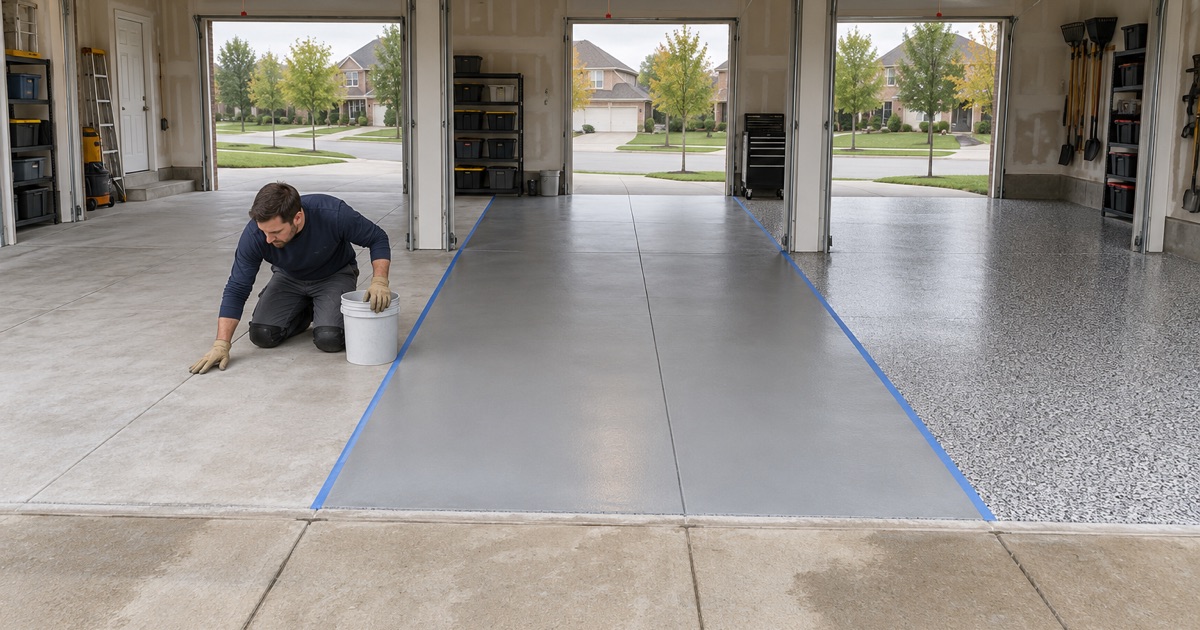
Three garage bays in a Glenview home at three stages: ground bare, gray base coat, and finished flake.

How an Epoxy Garage Floor Job Runs

A garage job starts with a walk-through, a moisture test and a crack map, then a written scope. On the install day we grind the slab, fill cracks and spalls, apply the base coat and broadcast, and finish with a topcoat, so you know exactly when you can walk on it and when you can park.

Attached Garage Dust and Odor Control

Most Glenview houses with a garage have an attached one, which puts the grinder and the resin a doorway away from the kitchen. We run vacuum-shrouded grinders, seal the house door, ventilate the garage and pick low-odor products, so dust and fumes stay in the garage instead of drifting into the house.

Detached Garage Floors That Sit Cold

A detached garage usually has no heat, which means its slab spends the winter cold and swings through freeze and thaw. We schedule these floors for the warmer months, pick a system rated for the temperature range the slab will actually see, and check whether the slab has a vapor retarder under it at all.

Vapor Retarders Under Older Garage Slabs

Many attached-garage slabs from the 1950s to 1970s were poured with no vapor retarder, because the model code exempted garages. Glenview’s Ordinance 6589 narrows that exception to detached garages, so a newer attached slab should have one. Either way, we test the slab instead of assuming what is underneath.

Moisture Testing a Garage Slab

We use the ASTM D4263 plastic sheet test as a first read and an ASTM F1869 calcium chloride test or ASTM F2170 in-situ relative humidity probes when the job calls for a number. The result decides whether the floor gets a standard primer or a moisture-mitigation primer, before the price is set.

Garage Floor Cracks, Spalls and Pitting

Cracks are chased and filled, spalls are rebuilt and pitting is ground smooth before any coating goes down. When a slab has heaved, sunk or broken into loose plates, a coating will only outline the damage, and we tell you the slab should be replaced first rather than coating over it.

Road Salt Damage on Bare Concrete

Calcium chloride and rock salt deicers soak into bare concrete and drive scaling as the slab freezes and thaws, which is why so many older Glenview garage floors are pitted at the tire path. A sealed epoxy or polyaspartic surface keeps the brine on top, where a squeegee and a rinse take it away.

Cold-Weather Garage Coating

Resin floors need a minimum slab temperature and a slab that stays above the dew point while they cure, or they cure soft and cloudy. We measure slab temperature and dew point spread on the day, and an unheated garage in deep winter is told to wait for spring rather than coated anyway.

Hot Tire Pickup on Cheap Coatings

A tire that has just come off the road is hot and soft, and as it cools on the floor it grips and pulls at the coating beneath it. A thin coating on a poorly prepared slab lets go under that pull, so we build thickness on a ground surface and seal it with a topcoat rated for tire traffic.

DIY Epoxy Kits Versus a Built-Up Floor

Store-bought kits are mostly thin, water-based epoxy over an acid etch, which is why they peel at the tire path within a year or two. A professional floor is ground to profile, built from 100% solids epoxy or polyaspartic in measured coats, and broadcast and topcoated, so it is many times thicker and far better bonded.

What an Epoxy Garage Floor Costs

The price moves with the garage’s size, the amount of crack and spall repair, any old coating that has to be ground off, the moisture result and the system chosen. A full flake broadcast with a polyaspartic topcoat costs more than a solid color floor, and our quote breaks out each of those so the number makes sense.

Basements, Sump Pits and Damp Slabs

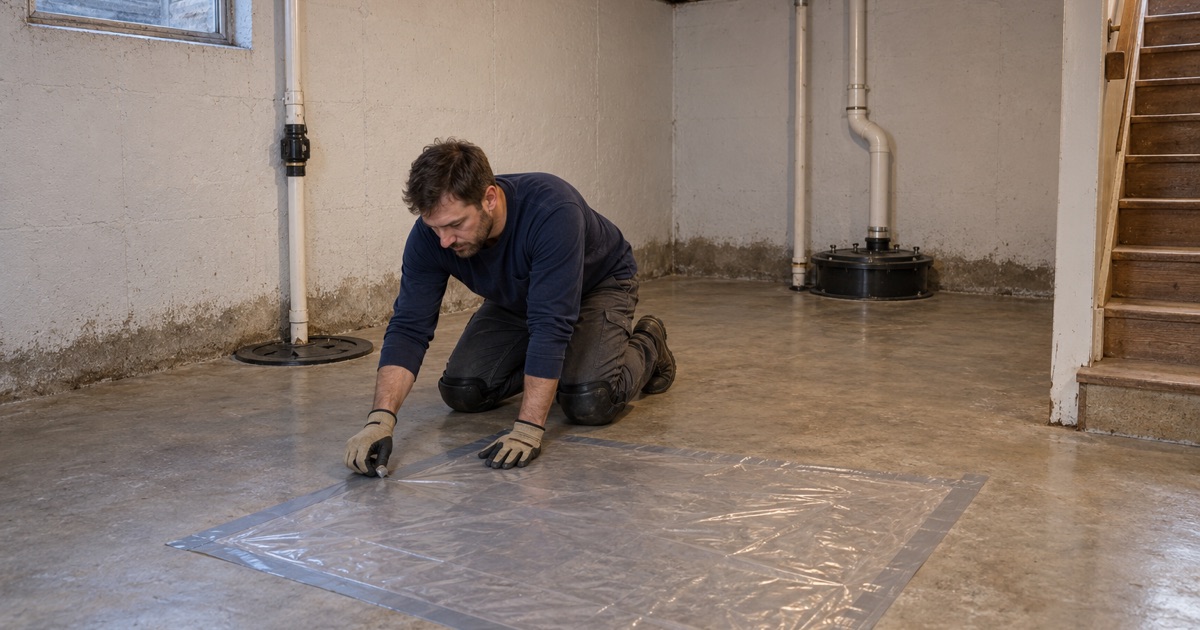
A taped plastic moisture test square on the bare basement slab of a Glenview ranch, beside the sump basin.

Basement Floor Epoxy and the Moisture Question

Most Glenview houses have a full or partial basement, and every basement slab sits against the ground with moisture moving up through it. Before we coat one, we test it and look for signs of past water, because a basement floor coating fails from underneath when the slab cannot breathe through the system chosen.

Old Paint, Patching and Tile Glue

Basement floors often carry decades of layers: porch paint, leveling patch, black mastic from old tile and spot repairs. We grind those layers off to sound concrete rather than coating over them, because a new floor is only as well bonded as the weakest layer under it.

Coating Around Sump Pits and Floor Drains

Sump pits, ejector pumps and floor drains are the low points of a basement, and they are where water and cleaning chemicals collect. We keep the coating clear of pit lids and drain grates, slope and detail the edges cleanly, and leave the equipment serviceable, so a pump can still be pulled without cutting the floor.

Glenview Overhead Sewer Cost Share

Several areas of Glenview see sanitary sewer backups into basements, and the village splits the cost of an overhead sewer conversion 50/50 up to a $15,000 project. If your basement has backed up before, that fix comes first, because a coating does nothing to stop sewage rising through a floor drain.

Coating After a Basement Flood

After water gets in, the slab has to be cleaned, disinfected where sewage was involved and dried out before it is tested. Coating a basement floor too soon traps moisture in the concrete, so we wait for the slab to read dry and fix the cause of the water before we schedule the floor.

Efflorescence on a Basement Slab

White powder on a basement floor is efflorescence: salts carried up through the concrete by moisture and left behind as it evaporates. It is a visible sign that water is moving through the slab, so we treat it as a reason to test and to consider a moisture-mitigation primer, not just something to scrub away.

Moisture-Mitigation Primers for Basements

When a basement slab tests above the limit for a standard primer, a moisture-mitigation primer is applied first to block vapor drive from below. It adds cost and time, but it is the difference between a floor that stays bonded and one that blisters or delaminates within its first year.

Laundry Rooms, Workshops and Home Gyms

A coated basement floor handles detergent spills in the laundry room, oil and dropped tools in a workshop, and rubber mats and dropped weights in a home gym. We match the system and texture to each space, adding grip where floors get wet and extra thickness where heavy equipment sits.

What a Coating Warranty Leaves Out

Nearly every coating warranty excludes failure caused by moisture vapor transmission and hydrostatic pressure under a basement slab, which are the two most common basement problems. We explain those exclusions before you buy, and we test the slab so the risk they describe is measured rather than guessed.

Floor Coatings Are Not Radon Mitigation

A coating can seal the surface of a slab, but in Illinois radon reduction is licensed mitigation work under IEMA, and a floor coating is not it. Nor is it waterproofing, so we never sell a basement floor as either; if radon or water is a concern, those are separate jobs for separate trades.

Color, Flake and Finish

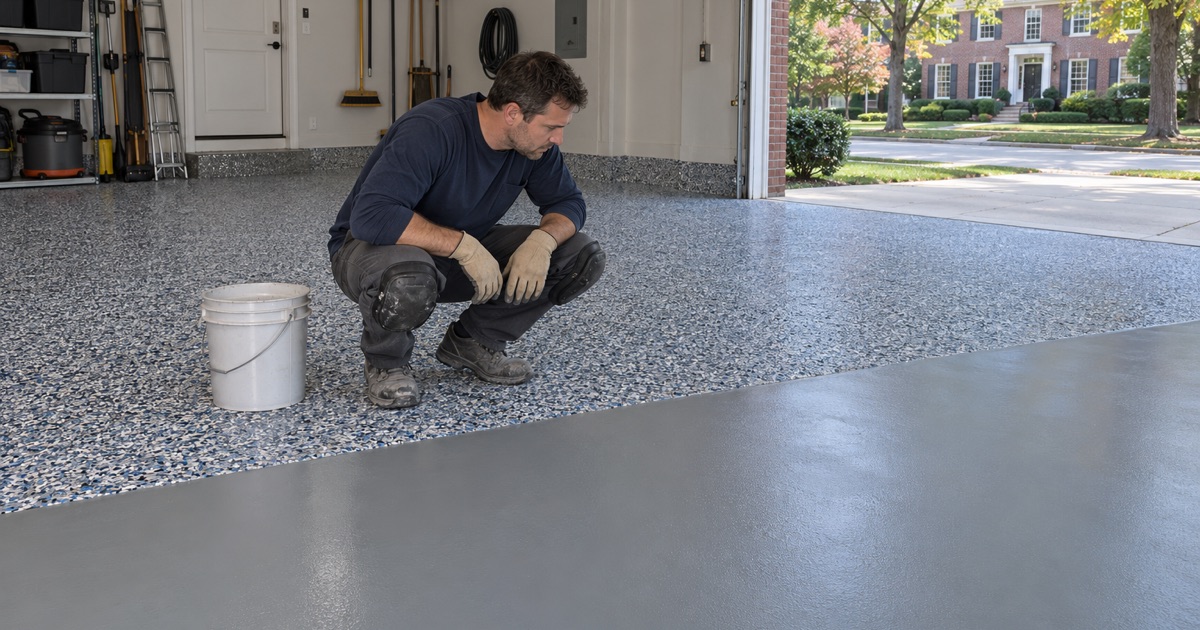
A finisher crouching at the edge where a dense blue-gray flake blend meets the bare base coat in a Glenview garage.

Vinyl Flake Floor Blends and Chip Sizes

A vinyl flake broadcast is thrown into the wet base coat, then scraped and sealed under a clear topcoat. The blend sets the color, and the chip size sets the texture and how well the floor hides dirt, with larger chips reading busier and hiding more and smaller chips giving a finer, more even look.

Metallic Epoxy Floor Installation

Metallic epoxy uses pigments that settle and swirl as the coat levels, producing a marbled, three-dimensional look. It needs a flawless base coat, careful working time and a crew experienced with how the material moves, because every roller mark and seam shows in the finished floor.

Polished Concrete and Aggregate Exposure

Polished concrete is ground in stages and hardened with a lithium silicate densifier, then polished to the sheen you choose. A light grind leaves a cream finish, a medium grind shows salt-and-pepper aggregate, and a deep grind exposes larger stones, and the slab itself decides how far it can go.

Gloss, Satin and Matte Topcoats

High gloss reflects light and brightens a garage, but it also shows dust, footprints and tire marks. Satin and matte topcoats hide everyday dirt far better and read calmer, so we show you samples under your own lighting before choosing the sheen.

Quartz Broadcast Floors

A quartz aggregate broadcast puts colored quartz into the base coat for grip and decorative color in a single step. Quartz floors are dense and hard-wearing, which is why they show up in commercial kitchens, locker rooms and wet areas where traction counts.

Solid Color Epoxy Coatings

A solid color floor without flake or metallic effects is often the right choice for a workshop, storage room or utility space. It is easier to clean, simpler to repair, and it can still be textured for grip when the floor gets wet.

UV Exposure and Ambering

Standard epoxy yellows, or ambers, under sunlight, which shows on a garage floor with the door left open. Polyaspartic and polyurea topcoats resist ultraviolet light, so we use them on floors that see daylight to keep the color true.

Saw-Cut Lines, Borders and Logos

Saw-cut control joints can be honored as design lines, filled flush, or framed with borders in a contrasting color. Logos and custom inlays are set into the coating for a showroom or gym, and we plan their layout with the slab’s joints so cracks do not run through them.

Clinics, Offices, Kitchens and Warehouses

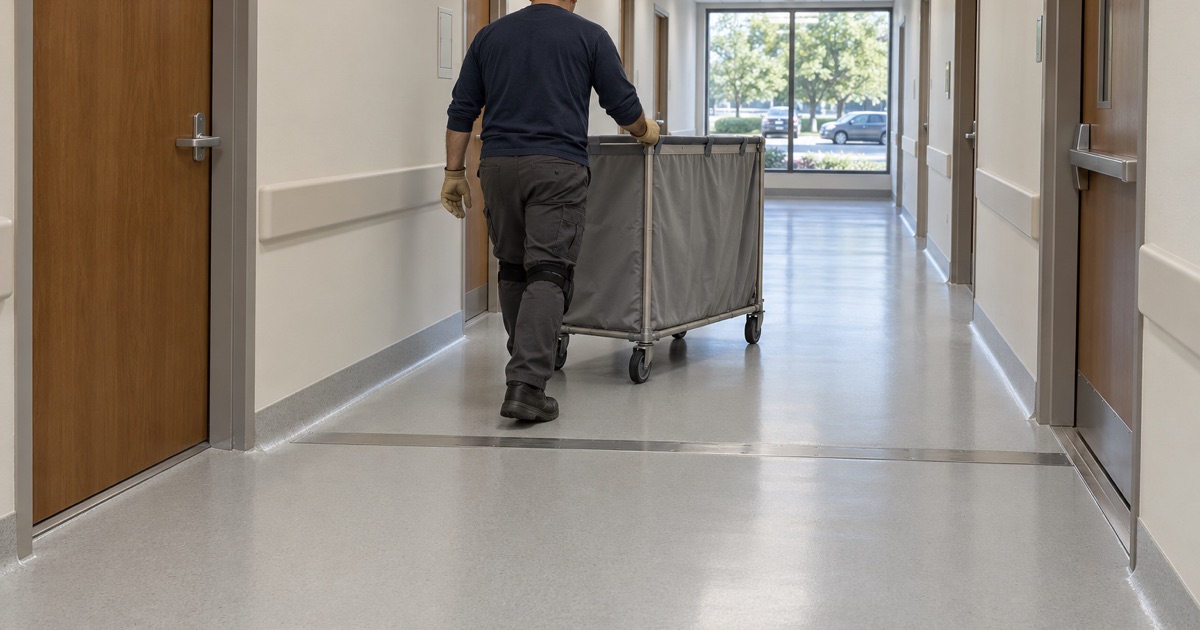
A wheeled linen cart steered across a coved, seamless corridor floor in a Glenview medical office building.

Commercial Epoxy Floor Projects Versus Home Jobs

A commercial floor comes with a schedule set by the business, a spec from an architect or owner, and often a sign-off from an inspector. We work from that spec, document the moisture test and surface profile, and phase the job so the space loses as little operating time as possible.

Medical Office and Clinic Floors

Clinic and medical office floors are wiped with disinfectants every day, which dulls and softens weaker coatings. We choose chemical-resistant systems with seamless, coved edges so the floor stays easy to clean and holds up under the cleaning routine a healthcare space runs.

Corporate Campus Mechanical and Storage Rooms

Glenview’s corporate and research campuses all have mechanical rooms, storage rooms and loading areas behind the offices. Those floors take spills, carts and equipment loads, so we coat them with tough, easy-to-clean systems that keep dust down and stand up to service traffic.

Restaurant and Bakery Kitchen Floors

Glenview’s own Inspectional Services Division inspects food establishments in the village, and food plan review commonly looks for floors that are smooth, durable and easy to clean. Under FDA Food Code 6-201.13, floor and wall junctures are coved and closed, so we install an integral coved base along with the floor.

Urethane Cement for Hot Kitchens

Where hot water, steam and harsh cleaners hit the floor every day, standard epoxy can soften and lift. Urethane cement handles the heat and thermal shock of a commercial kitchen, so it is our choice for dish areas, cook lines and bakery floors.

Gym and Fitness Center Floors

Gym floors take dropped weights, rolling equipment and daily cleaning. We build thicker systems with grip texture for weight areas and locker rooms, and match the topcoat to the cleaners the gym actually uses.

Auto Repair and Fleet Garage Floors

Service bays carry hot tires, oil, brake fluid and lift loads all day. We specify chemical-resistant epoxy with a urethane or polyaspartic topcoat, so fluids wipe up and the floor holds up under heavy vehicles and tools.

Warehouse and Light Industrial Epoxy Flooring

Forklifts, pallet jacks and racking put concentrated loads and abrasion on a warehouse floor. We grind or shot blast the slab, repair joints and spalls, and build a high-solids industrial epoxy system, adding safety striping and aisle marking where the layout needs it.

Illinois VOC Limits on Floor Coatings

Illinois limits the VOC content of floor and industrial maintenance coatings under 35 Ill. Adm. Code Part 223, and the rule binds the person applying them as well as the seller. Glenview sits in the Chicago ozone nonattainment area, so we choose compliant products for every job.

Night and Weekend Floor Installation

A restaurant, clinic or warehouse cannot always close for a floor. We work overnight and through weekends, use fast-cure systems where they fit, and control dust and odor so the space can reopen on time.

Areas We Serve

Glenview Epoxy Flooring provides epoxy-flooring throughout the greater Glenview area, with the same crews and the same standards on every job.

Good to know

Frequently Asked Questions

How much does epoxy flooring cost in Glenview?

Price follows square footage, the condition of the slab and the system chosen. A sound two-car garage with a flake broadcast costs far less per foot than a cracked basement that needs repair and a moisture-mitigation primer first. One national cost guide lists concrete coating in the Chicago suburbs at $3 to $15 per square foot, and our written quote shows where your floor lands and why.

How long does a garage floor coating take from start to finish?

Most two-car garages are ground, repaired and coated over one to two working days, depending on the system and how much crack repair the slab needs. The longer wait is the cure. We give you a walk-on time and a drive-on time in writing, and both depend on the slab temperature on the day rather than a fixed number.

Do you need a permit to coat a floor in Glenview?

Glenview's Development Center lists flooring and painting as work that does not require a permit, so coating an existing slab normally does not. Replacing the slab underneath is different and goes through the village's concrete review. If your floor needs replacement rather than a coating, we tell you that before we price anything.

Is epoxy or polyaspartic better for a Glenview garage?

Both can work well over a properly ground slab. A 100% solids epoxy base builds thickness and fills a worn surface, while a polyaspartic topcoat resists ultraviolet ambering and cures in a narrower weather window. Many of our garage floors use an epoxy or polyaspartic base, a vinyl flake broadcast and a polyaspartic top, chosen for salt and hot tires.

Will an epoxy coating stop water coming into my basement?

No. A floor coating is a wear surface, not waterproofing, flood protection or radon mitigation. Water that comes in through a crack, a wall joint or a backed-up floor drain will still come in, and hydrostatic pressure can push a coating off the slab from underneath. Leaks and backups get fixed first, then the floor is tested and coated.

What does the written proposal include?

It names the product line, the number of coats, the broadcast media and the finished thickness, plus the surface preparation method and the moisture test that will be run. On a home job over $1,000 you also receive a written contract and the Illinois Home Repair: Know Your Consumer Rights pamphlet before any work starts.

Can you coat a floor that already has paint or an old coating on it?

Often, but the old layer usually has to come off first. A diamond grinder removes paint, patching compound and tile adhesive down to sound concrete, and we test whether the old coating is still bonded where it stays. Coating over a loose layer simply hands its failure to the new floor.

What does a coating warranty usually exclude?

The most common exclusions are moisture vapor transmission and hydrostatic pressure coming up through the slab, followed by damage from impacts, chemicals and improper cleaning. We go through the exclusions on the specific product before the job is sold, so a warranty reads the same on the day of a problem as it did on the day you signed.

Do you work on commercial floors outside business hours?

Yes. Clinics, offices, restaurants and warehouses are phased around their operating hours, with overnight and weekend work when a space cannot close. Fast-cure systems, odor control and dust capture at the grinder are planned into the schedule so the space can reopen on the morning it was promised.

Ready to Get Started?

Request a free quote today and we'll get back to you fast.