
Glenview Epoxy Flooring installs flake epoxy floor systems in Glenview, IL, serving surrounding cities including Winnetka, Prospect Heights, Deerfield, Lincolnwood and Norridge. The flake floor is the system we put down most often in our 20+ years of floor work, because it combines a forgiving, dirt-hiding look with the texture and toughness a working floor needs.
A flake floor gets its finish from colored vinyl chips broadcast into the wet base coat and sealed under a clear topcoat. Done properly, over a slab that has been ground and tested for moisture, it holds up to winter salt, hot tires and daily foot traffic. Done badly, over a thin coat on an etched slab, it peels in exactly the same way a cheap kit does.
How a Flake Floor Is Built
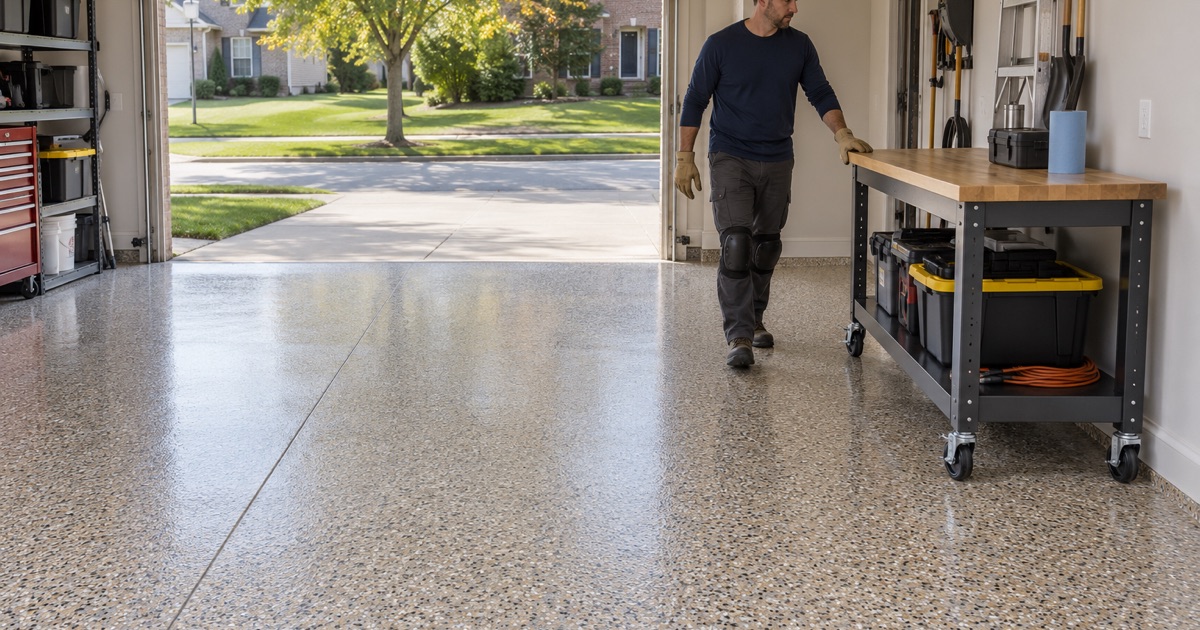
Ground Slab and Base Coat
Every flake floor starts with a slab opened by a diamond grinder or a shot blaster, with cracks and spalls filled and ground flush. The base coat, usually a 100% solids epoxy or a polyaspartic, is rolled out at a measured spread rate, colored to match the flake blend so the background tone blends in. That base gives the system its bond to the concrete and most of its thickness, and it is what keeps the flakes from wearing through at the tire paths.
Broadcasting the Vinyl Flake
While the base coat is still wet, the vinyl flakes are thrown evenly across it by hand until the surface is fully covered. Broadcasting to full rejection means adding chips until no more will stick, which gives an even look without bare patches or heavy clumps. Edges, corners and the area around drains are worked carefully so the coverage is consistent right up to the walls.
Scraping and the Clear Topcoat
Once the base has cured, loose and standing chips are scraped off with a floor scraper, and the floor is vacuumed thoroughly. A clear topcoat, typically polyaspartic or polyurea, then seals the flakes in and sets the final texture and sheen. That topcoat resists ultraviolet ambering, road salt and chemical spills, and it is where most of the wear on a flake floor happens over the years.
Choosing Your Flake Floor
Flake Blends and Colors
Flake blends range from neutral grays and tans to blacks, blues, browns and custom mixes. Neutral blends are popular in garages because they hide road salt residue and dust, while bolder blends can tie a basement or showroom to its decor. We bring physical samples and lay them on your slab, since a blend looks different on a screen than under your own lighting.
Chip Size and Coverage
Chip size changes the look as much as color. Larger chips create a busier, more varied pattern that hides more dirt, while smaller chips give a finer, more uniform finish closer to granite. A full broadcast covers the base completely for the most texture and durability, while a partial broadcast scatters chips over a solid color for a lighter, more decorative look.
Texture and Topcoat Sheen
The amount of topcoat applied over the flakes decides how textured the floor feels. A single coat leaves more texture and grip, while a second coat smooths the surface for easier mopping. We help you choose based on where the floor is, adding a fine aggregate in wet areas and choosing a satin or gloss sheen to suit the light in the room.
Flake Floors Around the House and Business
Garages Through Salt Season
Most Glenview houses with a garage have an attached one, and in winter that garage collects brine, rock salt and slush from every trip. A full broadcast flake floor with a polyaspartic topcoat keeps that salt on the surface, hides the residue between rinses and resists hot tire pickup. We schedule the work around slab temperature and dew point rather than the calendar, so an unheated garage in deep winter waits for better conditions.
Basements, Laundry Rooms and Gyms
Basement flake floors brighten a lower level and give it an easy-to-clean surface that does not show every footprint. They suit laundry rooms, workshops and home gyms, where grip and durability matter more than a glossy look. As with any basement coating, we read the slab for past water and test it for moisture before choosing the system, adding a moisture-mitigation primer when the readings call for one.
Commercial Restrooms, Locker Rooms and Break Rooms
In commercial buildings, flake floors are a practical choice for restrooms, locker rooms, break rooms and back-of-house areas. The seamless surface is easy to clean, the texture gives grip near sinks and showers, and an integral coved base at the walls removes the seam where dirt collects. We phase these jobs around building hours so restrooms and staff areas are back in use quickly.
Caring for a Flake Floor
Cleaning and Maintenance
A flake floor needs little more than regular sweeping and a damp mop with a pH-neutral cleaner. In winter, squeegee slush out of the garage and rinse the floor every few weeks so salt does not dry into a crust. Avoid harsh acids and abrasive pads, which dull the topcoat, and put mats at entries to catch grit tracked in from outside.
Refreshing the Topcoat Over Time
After many years of use, the topcoat on a busy flake floor can dull or wear in traffic lanes. Because the flakes sit under the topcoat, the floor can often be lightly abraded and recoated with a fresh clear topcoat, restoring the sheen and protection without grinding off the whole system. We check the floor’s condition and bond before recommending a recoat.
- 20+ Years on Concrete
- Moisture Test in Every Scope
- Free Written Estimates